
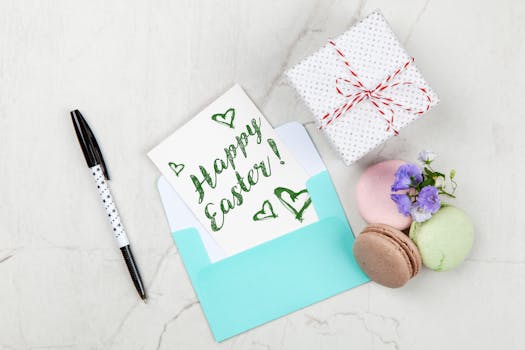
Remember the last time you received a handwritten card? That unique slant of the letters, the subtle ink bleed on the paper, the very imprint of the sender’s personality. It’s a tactile, intimate connection in an increasingly digital world. But what if life’s busy schedule, or perhaps a less-than-steady hand, makes traditional handwriting a challenge? Enter the fascinating realm of AI Handwritten Greeting Cards. This isn’t about replacing genuine emotion with algorithms; it’s about augmenting our ability to express it, blending cutting-edge technology with timeless sentiment.
The idea of “AI handwritten” might initially sound contradictory. After all, isn’t handwriting inherently human? It is, and that’s precisely where the magic lies. AI is now sophisticated enough to mimic the nuances of human script with remarkable accuracy. This opens up a world of possibilities for creating personalized greetings that feel authentic, even when generated by a machine. From crafting the perfect birthday message to sending a heartfelt thank you, AI-powered tools can help you maintain that cherished personal connection.
Why Consider AI for Your Greetings?
The practical applications for AI handwritten cards are surprisingly vast. Beyond mere convenience, they offer a bridge for those who might struggle with physical limitations or time constraints.
Bridging the Gap for All: For individuals with conditions that affect their motor skills, like arthritis or tremors, AI offers a way to continue sending beautifully written cards without physical strain. It democratizes the act of thoughtful communication.
Saving Precious Time: In our fast-paced lives, finding the time to meticulously write out dozens of cards can be daunting. AI can significantly speed up this process, allowing you to focus on the content of your message rather than the act of writing it.
Consistency and Clarity: AI can ensure a consistent and legible handwriting style across all your cards. This is particularly beneficial for business correspondence or when sending multiple greetings for a large event, ensuring a professional and polished look.
Unique Stylistic Choices: Many AI tools allow you to select from various handwriting styles. This means you can choose a script that best matches the tone and occasion of your card, from elegant script to more casual, block lettering.
How Does the AI Magic Happen?
The technology behind AI Handwritten Greeting Cards is quite ingenious. It typically involves training algorithms on vast datasets of human handwriting. These algorithms learn the patterns, strokes, and individual quirks that make each person’s handwriting unique.
- Learning the Strokes: AI models analyze how letters are formed, the pressure applied, the angle of the pen, and even the subtle variations that occur between words and sentences.
- Mimicking Nuances: Advanced AI can go beyond simple letter replication. It can learn to introduce slight imperfections, such as a stray ink dot or a slight wobble, that lend an air of authenticity.
- Personalization Engines: You typically interact with these tools through a user-friendly interface. You type your message, choose your desired handwriting style (sometimes even uploading a sample of your own handwriting for the AI to learn from), and the AI generates the text.
- Output Options: The generated text can then be printed directly onto cardstock, or in some cases, the AI can guide a robotic pen to “write” the message onto the card, offering an almost indistinguishable result from human handwriting.
It’s a fascinating blend of data science and artistic replication. I’ve personally found that the more specific you can be with the AI’s parameters – like choosing a slightly messy cursive or a clean, print-like style – the more convincingly authentic the final product feels.
Finding the Right AI Tools for Your Needs
The landscape of AI-powered writing tools is constantly evolving, and several platforms now cater specifically to the creation of handwritten-style messages. When choosing a service or software, consider these factors:
Customization Options: Does the tool offer a variety of fonts that resemble handwriting? Can you adjust line spacing, letter size, or even inject a degree of random variation to make each card unique?
Learning Capabilities: Some advanced tools allow you to upload samples of your own handwriting. The AI then learns your specific style, offering a truly personalized touch. This is often referred to as “custom AI handwriting generation.”
Ease of Use: The interface should be intuitive, allowing you to input your message and select your preferences without a steep learning curve.
Output Format: Will you be printing the text yourself, or does the service offer a print-and-mail option? Understanding the workflow is crucial.
Cost: Pricing models vary, from subscription services to pay-per-card options. Evaluate what fits your budget and usage frequency.
Exploring services that offer AI handwritten greeting cards as a core feature, rather than just a font option, will generally yield better results. Look for platforms that emphasize the mimicry of human penmanship.
Beyond the Basics: Elevating Your AI-Generated Cards
Simply generating text and printing it might be functional, but to truly harness the power of AI handwritten cards, consider these tips for adding that extra layer of thoughtful personalization:
Focus on the Message: The AI handles the “handwritten” aspect, so you can dedicate your energy to crafting a meaningful message. Pour your heart into the words.
Integrate Personal Touches: While the writing might be AI-generated, you can still add your own flair. Consider adding a small doodle, a sticker, or even a spritz of your favorite perfume to the card before mailing.
Choose High-Quality Stationery: The paper and cardstock you use play a significant role in the overall impression. Opt for premium materials that complement the AI-generated script.
Combine with Digital: For a modern twist, you could include a QR code that links to a personalized video message or a curated playlist, adding a multimedia dimension to your card.
Experiment with Styles: Don’t be afraid to try different AI handwriting styles. A playful, informal script might be perfect for a birthday, while a more formal, elegant font could suit a wedding anniversary.
The Future of Thoughtful Communication
The integration of AI Handwritten Greeting Cards represents a fascinating evolution in how we express ourselves. It’s not about sacrificing authenticity but enhancing our capacity for thoughtful gestures. For businesses seeking to maintain client relationships, for individuals wanting to stay connected with loved ones despite geographical distance or busy schedules, or for anyone who appreciates the sentiment of a personal note, AI offers a powerful and accessible solution. It allows us to retain the feeling of a handwritten card, even when the physical act of writing it is augmented by technology. This allows us to share our sincerity and care in a way that resonates deeply.
Final Thoughts: Embracing the Modern Hallmark
Ultimately, the goal remains the same: to convey warmth, appreciation, and affection. AI Handwritten Greeting Cards are not a shortcut to insincerity, but rather a sophisticated tool that empowers us to maintain meaningful connections in a world that often pulls us in a million directions. By understanding how these tools work and how to use them effectively, we can ensure that even our digital-age missives carry the weight of genuine human sentiment. So, the next time you need to send a card, consider letting AI lend a hand – or rather, a perfectly mimicked pen.